Design
This is a high-level description of the design of Siguldry.
Siguldry leans heavily on systemd sandboxing and encryption features, and is not expected to work without them. Every service is expected to use systemd credentials for private keys used for TLS authentication and for key passwords used by clients. Socket-activated services are used to isolate client connections from each other and to ensure key material is never decrypted in the network-facing service.
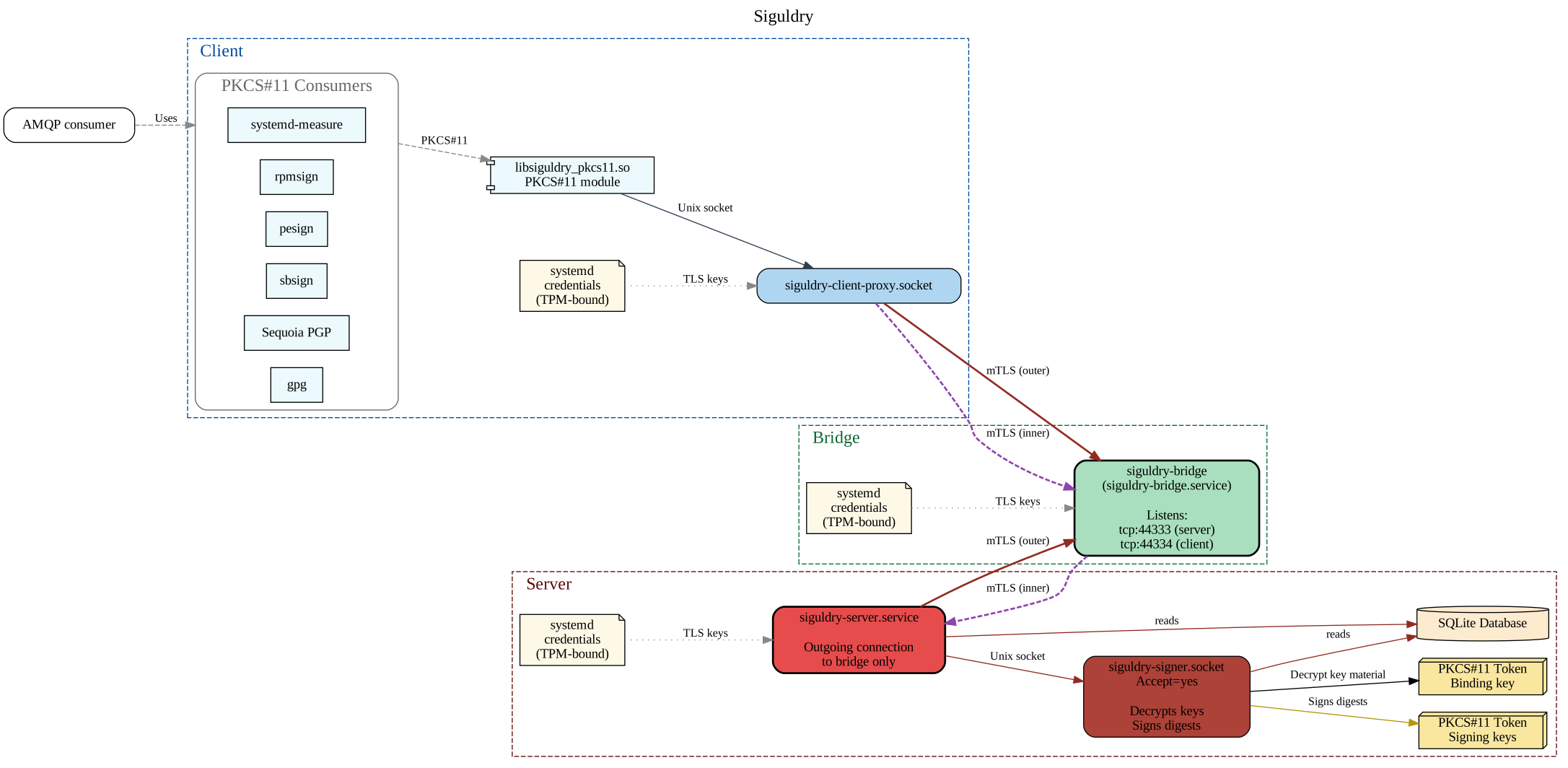
Server
The server component of Siguldry does its best to isolate the keys, whether they are hardware-backed or stored in the database, and only allow authenticated users to sign content. It does not make decisions about what should and should not be signed. It is also designed to not allow the keys to be extracted by users of the service.
It’s important to note that while the server fills a similar role to a hardware security module, there’s not necessarily any hardware preventing a malicious administrator from exfiltrating the database containing signing keys. While the keys are encrypted with per-user credentials, the users that are administrating the server may also have access to credentials for a key.
Each client connection’s signing operations are isolated from the main signing service and other connections using a systemd-managed socket-activated “helper” service. This helper, running in a separate process with additional systemd sandboxing features, is the only place signing keys are decrypted.
Key Storage
Signing keys are stored either in an SQLite database, or are provided by PKCS#11 tokens that have been registered with the service.
Database Signing Keys
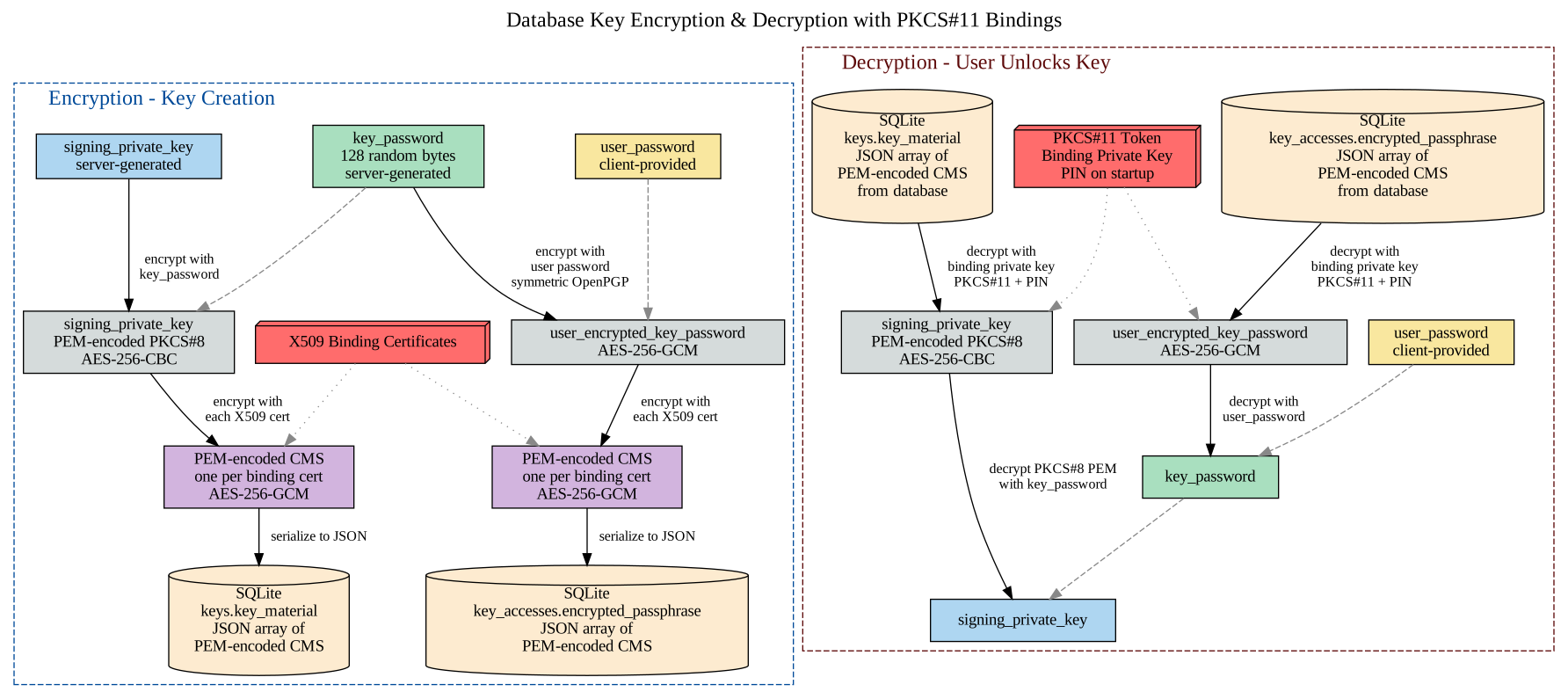
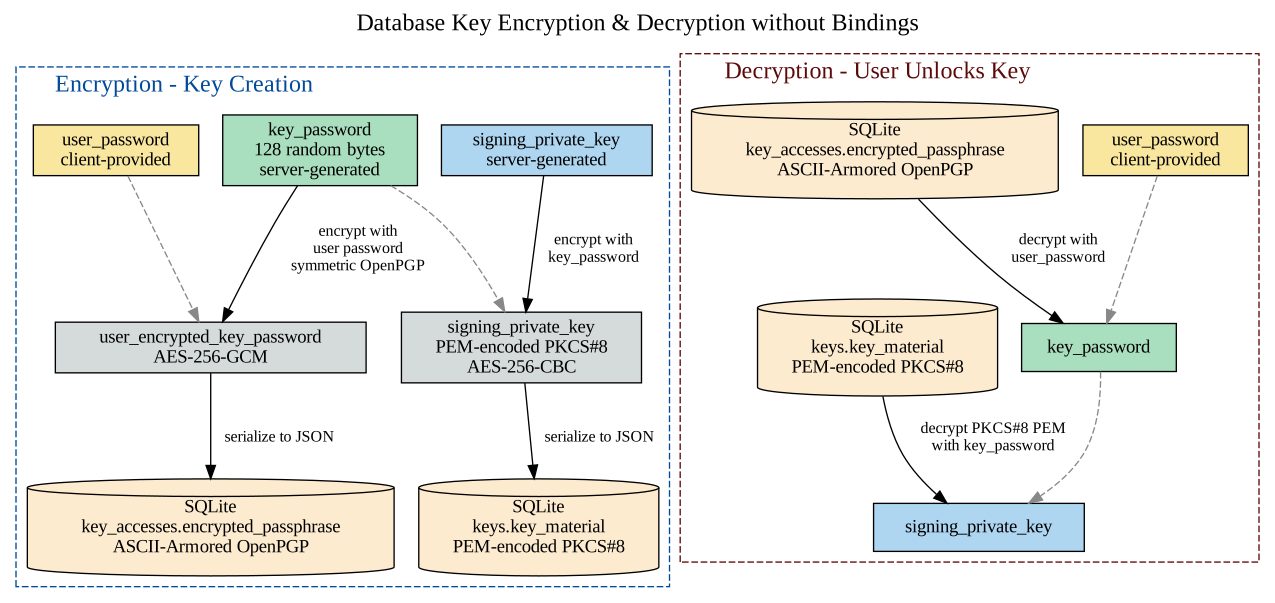
Private keys in the database are stored as PEM-encoded PKCS#8 EncryptedPrivateKeyInfo structures using AES-256-CBC. The passphrase used to encrypt the key is 128 bytes of cryptographically strong pseudo-random bytes generated on the server from OpenSSL’s RAND_priv_bytes interface. These bytes are then base64-encoded and the result is used as a passphrase. This passphrase never leaves the server.
The passphrase is encrypted for each user that is granted access to the signing key using their personal access key. This is done using Sequoia OpenPGP using AES-256-GCM. Since the signing service is expected to be used by service accounts, there is no key derivation function applied to these personal access keys. Fedora uses 64 byte random strings.
Optionally, the server can be configured with “bindings”. If configured, both the PEM-encoded PKCS#8 EncryptedPrivateKeyInfo and the user’s personal access key are further encrypted using a list of X509 certificates provided in the server configuration. These certificates should correspond to private keys stored in a hardware token accessible via PKCS#11. For each certificate in the list, the key and user personal access key is encrypted to a CMS structure using AES-256-GCM. The list of encrypted keys and user personal access keys passphrases are then serialized to JSON and stored in their respective database tables.
When configured with bindings, at least one of the configured binding certificates must be accompanied with the PKCS #11 URI to the associated private key. On server startup, the system administrator provides the user PIN needed to access that private key, which is used to decrypt the EncryptedPrivateKeyInfo structures and users personal access keys.
For example, the encrypted_passphrase column in a key_accesses database entry would look like
this if no bindings are configured:
[
  {
    "None": {
      "secret": "-----BEGIN PGP MESSAGE-----\n\nw0wGGgkDCwMIKoQnCYAo+p7/ASQVDKXQHsJQgRXYNaxsJFM/aCWdtifXq5ISLQCs\n9Z30Hu9kMijeq0XW0ft/S7o/72kfF46zmtEgt+kl0lsCCQMGAt8yECM9A3CSXQvg\nsO0W6FFwadq+Rop/ltpQvNNnuDv2VIb4PgbZddi6lm9omoCssU8duth2KZiFq7dz\niapgan577BXP86LIMKFka95Hp0eSVpNr/jwk\n-----END PGP MESSAGE-----\n"
    }
  }
]
If bindings are configured, the entry would look like:
[
  {
    "Pkcs11WithCMS": {
      "fingerprint": "87ACAE45EB6436A78A425389F7925C549CCA33527EB0563CD325D2B180E2E7F2",
      "secret": "-----BEGIN CMS-----\nMIIC2gYLKoZIhvcNAQkQARegggLJMIICxQIBADGCAVMwggFPAgEAMDcwHzEdMBsG\nA1UEAwwUc2lndWxkcnktYmluZGluZy1rZXkCFFcbvBPbtFsk+9QtrZ7HcyJ96YNJ\nMA0GCSqGSIb3DQEBAQUABIIBADFlQzT9vdoQl0aL0VbAIcn/CljfxxtfYNHZfZBk\ngymO7qt6o8lMqpn4+P1RT0byn3whDF8Zbi+pDjYTBPPug5frfPksrYm5jjGI3Zhe\n/YIGrqdXJl/hQ0ZRcp+SkUdchEjO2dqTlP0SF6jg9OvVMVAE9YNZnNexWOQ3g13q\nyiM8dINe3OP/wnudVo4F1mslCDJshPMIRhSF+CLTZYFE+RNGvgLAG13WUNgl5RY8\nt0oZN7Gk717f1jUQHGrkbelnJad4ajA+EZxR6L0nRJLPeqHd2lf6n70CeKumQjBP\n5LzXavP7hOnYJCqA8Nv2N9rVGvomNPbYh4ryrQE97HgngEYwggFVBgkqhkiG9w0B\nBwEwHgYJYIZIAWUDBAEuMBEEDG6+qCHM6cQ6zhyD9gIBEICCASbMbmqHzUZKtNms\nNmGyr+QNa1+Nm+kEio4zcnfigJZ4bc54Z1hXOGUbtEsYigtZyyyjnHyoot/6bU3+\np7wqMofQMMgZVFnp3DBcfUYUXW3EyEDILOxfNJao6yDl2fwAb2l9x9bzJu7HqkSo\nK1Nplc6mqBtkZmed3CehLHrA80NfysC10jXaSPZul3vyKEzvSyds1dvETpwq8c/V\n4co83bwdrIpSe6IxAtRrz1i2wTEbYHsQcTZ4mnN0kvkaL0yYMW/m+el3isESAM5V\nIPScd45sGmT4ocESKB2AXe6kETorq95zzcEpKsdEhSneOn60zIndsz7sC8NTrZJO\nIgUCUf3EOrun+7bsrKyDKzJrabMne7jwKVl5/O7j8vCPoMnWqaaBYGfwURMEEF7L\njFoHe9PbvoWR0LXx4P4=\n-----END CMS-----\n"
    }
  }
]
With bindings, a malicious actor needs to steal both the SQLite database and the PKCS#11 token used for binding to access the keys.
Encrypting and Decrypting with Bindings
Encrypting and Decrypting without Bindings
PKCS#11 Signing Keys
For signing keys stored in a token accessible via PKCS#11, the administrator registers the token and, as part of registration, provides the token’s user PIN. This PIN is treated in the same manner as the server-generated password for a database key: it’s encrypted with a user’s personal access key, and then encrypted with any binding X509 certificates.
Siguldry never stores the actual private key material for signing keys backed by PKCS#11 tokens. At this time, administrators must use standard tools like pkcs11-tool to manage the tokens outside of Siguldry.
PKCS#11 tokens may store multiple key pairs, and there’s only one user PIN protecting them. Siguldry clients never have access to the PIN itself. If a client has been granted access to one key in a token, the server does not allow the client to perform signing operations with other keys in the token. However, this is a server-enforced rule rather than a cryptographically-enforced restriction so a flaw in the server could allow clients to perform signatures using other key pairs in a token it has been granted access to.
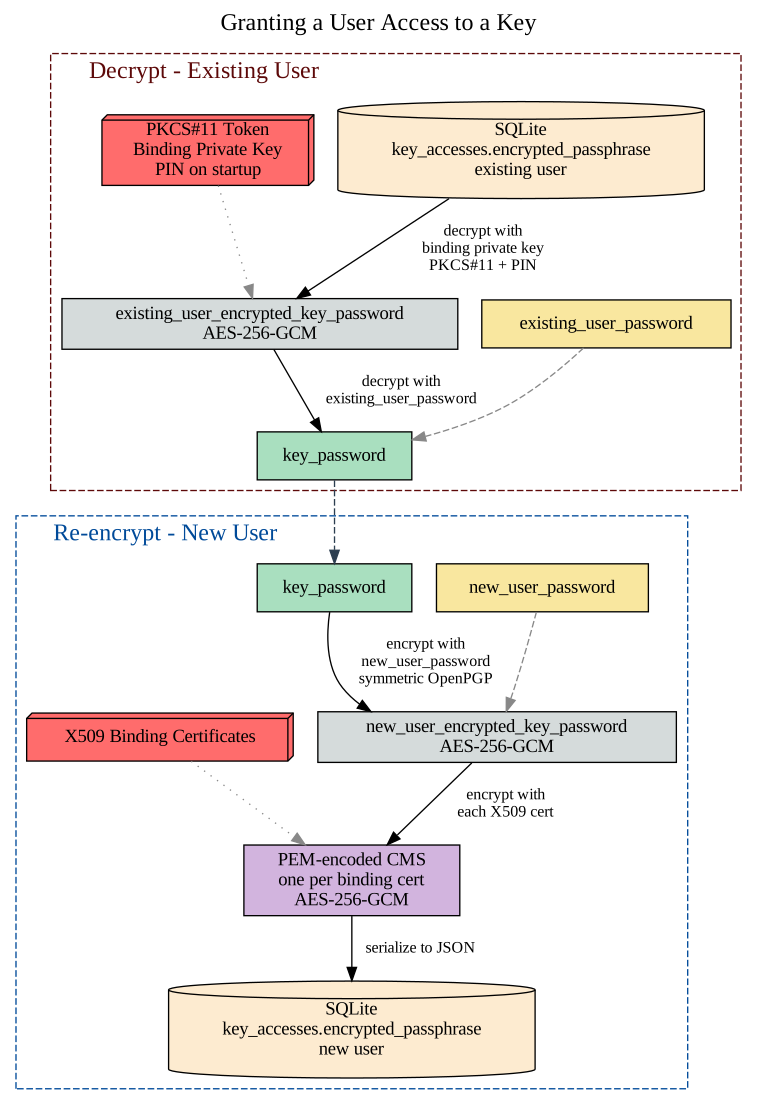
Granting Key Access to Users
After a key is created, it is encrypted with the creating user’s key as well as any binding keys. To grant additional users access to the key, the initial user must provide their access key, as well as the access key of the new user.
Client Access
The main server process, run by the siguldry-server.service systemd unit, connects using mutually TLS to the bridge service. The bridge service is discussed in depth later, but is essentially a proxy with strong authentication requirements.
Other than this outgoing TCP connection to the bridge, the server expects to be isolated from other hosts. While allowing other network access to the server should be safe (e.g. the server does not listen on any network interfaces), care should be taken since that makes it easier for unauthorized users to access the keys stored in the database.
The server only accepts client connections using its outgoing connection to the bridge. It does this by treating the bridge connection as an incoming connection after the handshake is complete. This nested TLS session also uses mutual TLS to authenticate the client. The client is identified by the Common Name field in its client certificate. The value of that field must match a user in the database or the connection is dropped.
Signing
This main service is configured in the systemd unit to have read-only access to the data directory containing the database as it needs to look up user and key information, but for keys stored in hardware tokens, the main service should not be granted access to those devices.
There is a second systemd service and an associated systemd socket, siguldry-signer@.service and
siguldry-signer.socket respectively. systemd starts a new siguldry-signer@.service instance for
each connection opened with the Unix socket it is configured to listen on. By default, this socket
is /run/siguldry-signer/signer.socket. The main service process opens a connection to this Unix
socket for each client connection.
This helper service is the only place signing keys are accessed. As such, this service may need to be adjusted by users to grant it access to hardware tokens. However, beyond that, the service is intended to be as locked down as possible: the entire filesystem is mounted read-only, it has no network access, and it should opt into as many of the sandboxing capabilities systemd provides as possible.
Bridge
The bridge component of Siguldry is designed to allow access to the server, but only if the client can successfully authenticate using mTLS. Beyond this, the bridge ferries bytes between the client and server. The client establishes a nested TLS session with the server so the bytes cannot be inspected or tampered with by the bridge.
Client
The client is expected to run in a trusted environment, and the program invoking the client is expected to be responsible for policy decisions about what will and won’t be signed.
The primary interface for signing is provided by the libsiguldry_pkcs11.so PKCS#11 module combined
with a systemd service that proxies requests from a Unix socket to the server. This client proxy can
be configured to unlock one or more signing keys, in which case users of the PKCS#11 only need to be
able to access the Unix socket. If the client proxy isn’t configured to unlock keys, the user is
responsible for unlocking the key using the personal access key as the user PIN.
Differences with Sigul
This section is intended for users who are familiar with the Sigul design and want to know what’s different.
The primary reason for these changes are because the way Fedora Infrastructure deploys Sigul is very different from how Sigul was originally expected to be used. If we assume the client is trusted, as Sigul could not, a number of complicated aspects of the protocol go away.
The Client
Originally, Sigul was designed for the client to be used by individual Fedora contributors. Thus, great care was taken in the Sigul bridge and server to validate client input.
Siguldry, on the other hand, assumes the client is run in a trusted environment. It expects the users of the client to handle validating the input should be signed. For example, in Fedora it is expected that signing is triggered via AMQP messages. The consumer of those messages must validate the content before requesting a signature from the Siguldry client.
The Bridge
One major difference with Sigul is that all client-server communication happens in the nested TLS session, and as such, it is no longer possible to mix traffic to the inner and outer TLS sessions: after the protocol header is sent to the bridge, all traffic must be sent via the inner session.
The primary reason in Sigul to allow the bridge to inspect traffic between the client and server was to perform validation of that content. As noted in the client section, the client was not entirely trusted, so the bridge was responsible for checking if, for example, the RPM built in Koji.
Since Siguldry assumes the client is trusted, there’s no reason for the bridge to inspect traffic. Removing this makes handling the traffic easier for clients and servers, too, since they no longer need to track inner vs outer TLS session traffic.
The Server
In Sigul, the server was aware of the type of content it was signing. It ran rpmsign to handle
RPMs, for example. This meant that content needed to be sent to the server, and that the tooling
available on the server had a significant impact on what content was supported. Old versions of RPM
on the signing server meant Fedora couldn’t take advantage of some new features.
In Siguldry, the server signs digests. It does not need to be made aware of new types of content, and the versions of the tools available in the operating system the server runs don’t impact the types of content it can sign.
The signatures algorithms it is capable of still depend on what version of OpenSSL the server has.
The database schema is very similar, and it is possible to migrate Sigul data to Siguldry. The key storage scheme is nearly identical.